Case Study: Supporting Scalable Decontamination Control for Capricor Therapeutics
Client Context
Capricor Therapeutics, Inc. is a US-based biotechnology company focused on developing transformative cell and exosome-based therapies. Its work in precision medicine, including treatments for Duchenne muscular dystrophy and beyond, places high demands on cleanroom control, material handling, and contamination risk management.
Operating within regulated environments, Capricor requires decontamination systems that deliver repeatable, validated performance while remaining compatible with heat-sensitive materials and day-to-day operational workflows.
To support these requirements, Capricor partnered with PBSC to supply a coordinated decontamination solution comprising five hydrogen peroxide decontamination chambers and one material transfer hatch, engineered to deliver consistent performance across multiple systems.
Client Requirements and Project Scope
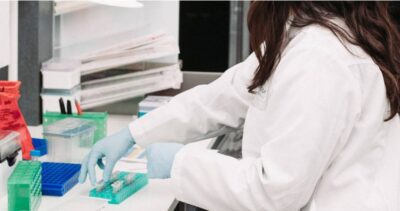 This project involved the coordinated supply of six hydrogen peroxide decontamination systems comprising five chambers and one material transfer hatch, delivered as a single package. While the underlying system architecture is well proven, delivering multiple identical units introduces a different set of requirements.
Consistency of build, repeatability of performance, and alignment across all control and containment systems were essential to ensure each unit operated in exactly the same way once installed.
Standardising construction, control architecture, and process parameters across all chambers supported predictable performance, simplified validation activities, and consistent operational use across the installation.
The project required:
- Consistent decontamination performance across multiple units
- Robust containment and safety systems
- Automated control and monitoring
- Compatibility with heat-sensitive equipment and materials
- Installation-ready systems to support efficient site integration
Construction and Material Standards
All chambers and the transfer hatch are manufactured from polished AISI 304 stainless steel, Internal chambers are fully welded, with welds ground smooth and polished to support cleanability and durability.
All seals, plastics, and internal components exposed to hydrogen peroxide vapour are tested for material compatibility, supporting long-term performance across all units.
Containment and Safety Systems
Each chamber and hatch is fitted with inflatable silicone door seals and interlocked doors to prevent simultaneous opening. Flush-mounted maglocks and proximity sensors confirm correct door positioning before cycle initiation.
cycle override buttons are provided externally on both sides, with internal emergency release included as standard. In the event of power loss, systems enter a safe mode to prevent vapour release.
Decontamination Performance and Cycle Validation
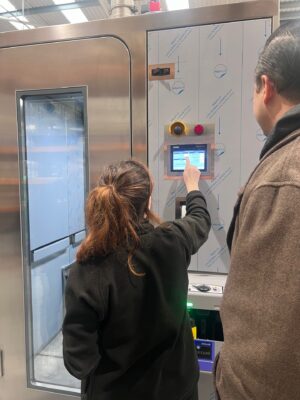 Hydrogen peroxide vapour is delivered via an integrated generator with adjustable injection control. Cycle parameters are continuously monitored to ensure repeatable, validated performance across all chambers.
The system is capable of supporting log 6 biological reduction using controlled hydrogen peroxide vapour cycles. It is suitable for a wide range of materials, including heat-sensitive equipment, with typical cycle times from approximately 30 minutes depending on load configuration.
Control Architecture and Automation
All systems utilise the same Siemens PLC-based control architecture, with dual-sided touchscreens enabling operation from either side of the chamber.
Standardising control logic across all units supports consistent operation, simplified training, and predictable performance across the installation. Secure data logging and Ethernet connectivity are provided as standard.
HVAC Integration and Aeration Control
Inlet and extract air are supplied by the building HVAC system and are permanently connected to the chambers. Chamber operation is coordinated with the HVAC system to maintain pressure balance during use, including when chamber doors are opened, ensuring integration with the surrounding cleanroom environment.
Project Outcome
By delivering multiple identical decontamination systems as a coordinated package, PBSC supported Capricor’s requirement for scale without variability. Standardised design, construction, and control ensured consistent performance across all chambers and the transfer hatch, supporting predictable operation and simplified validation within a regulated environment.
- Previous
- Next